
Bishop. Emperor. Everyman.
200 Years of Salzburg within Austria 30.4.2016 until 30.10.2016
About the exhibition
From April 30 to October 30, 2016, visitors were invited to explore Salzburg’s eventful history through an exhibition trilogy, tracing the city’s development from the wealthy Prince-Archbishopric, through periods of war and changing political rule, to the present day. The exhibitions “Salzburg Treasury,” “Tell Me About Salzburg,” and “At the Scene” featured treasures that once belonged to Salzburg, exhibits from the museum’s own collections, as well as installations and video animations by Salzburg-based photographic artists. Spread across three levels, the exhibition trilogy focused on different aspects of Salzburg’s artistic and cultural history, taking the significant year 1816 as its point of departure. Visitors embarked on a unique journey through Salzburg’s past. Alongside some of the most beloved objects from the Salzburg Museum’s collection, the exhibitions presented artifacts that, after nearly two hundred years, were returning to Salzburg for the first time. Each of the three special exhibitions was conceived as a self-contained thematic presentation. Together, they formed the centerpiece of the events and projects commemorating the anniversary year “Salzburg 2016,” marking 200 years of Salzburg as part of Austria.
Treasure House Salzburg
Salzburg’s Treasures Return
Over the centuries, the Prince-Archbishops of Salzburg amassed extensive and exceptionally high-quality collections in keeping with the ideals of Baroque representation. These holdings included paintings and prints, furniture and porcelain, minerals, weapons and coins, books, and sculptures. Many of these objects were created specifically for Salzburg and formed part of its sacred treasures and secular valuables. The Prince-Archbishops commissioned works from renowned artists, including ivory carvings, objects made of rock crystal, ibex horn, goldsmiths’ works, and paintings. These items belonged to the court treasury and served as symbols of prestige and power. As a result, magnificent works of art—such as extraordinary objects crafted from rock crystal—were produced in Salzburg. What makes this exhibition particularly remarkable is the way the objects have been brought together. The exhibition presents works from different historical periods and made from a wide variety of materials. During the Early Modern period, rulers naturally regarded such treasures as their personal property, and in times of war it was not uncommon for entire collections to be transported to another residence for safekeeping. Each exhibit tells its own story and raises intriguing questions: What was its original purpose? How was it created, and how did it come to Salzburg? The exhibition “Salzburg Treasury” (Schatzkammer Salzburg), presented in the Kunsthalle on the lower level of the Neue Residenz, seeks to foster an awareness among visitors of Salzburg’s former wealth and its historical importance within Europe.
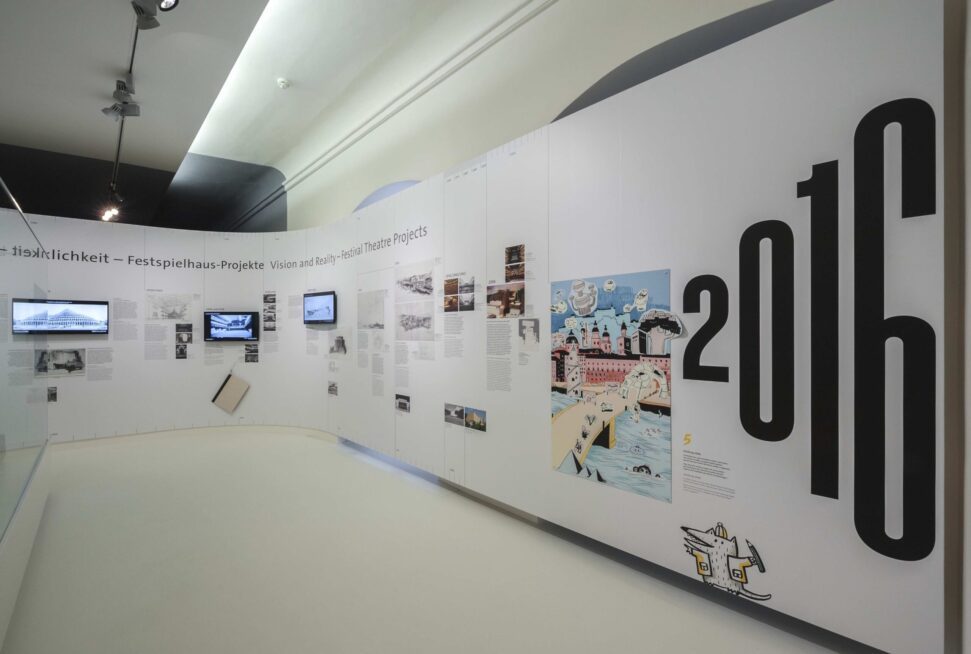
The special exhibition “Tell Me About Salzburg!” focuses on events and personalities spanning two centuries, offering insights into Salzburg’s art and cultural history. All of the stories presented originate within the period between 1816 and 2016; at the same time, they either reach far back into the past or had far-reaching consequences for the future. As visitors move from room to room and from one theme to the next, they are invited to explore Salzburg and its history from unusual perspectives and through a variety of narrative approaches, discovering new ways of engaging with the city’s rich cultural heritage.
An Overview of the Twelve Histories and Stories
- Truly Legendary! Salzburg’s World of Legends and Its Relationship to History
- Tracing the Past – How Salzburg Discovered Its History and Told Its Legends
- “Silent Night! Holy Night!” – What a Song Can Tell Us and What It Reveals About Its Time
- Schubert Loves Haydn. Haydn Loves Mozart – and Soon the Whole World Does Too
- Under the Patronage of Empress Dowager Caroline Auguste
- “Homeland Is Holy Land” – A Snapshot of 1916: 100 Years of Salzburg as Part of Austria
- Back to the Future: Salzburg Utopias of the Interwar Period
- Salzburg and National Socialism: The Burden of a Difficult Legacy
- Wotruba and Thorak: A Salzburg Summit of a Special Kind
- Art in the Shadow of the Cold War – Or How the “Cultural Bolshevik Atomic Bomb” Was Detonated in Salzburg
- “Two Days in the Presence of Mount Wolkenküchenberg” (Peter Handke) – Literary and Cinematic Images of Salzburg
- The Museum Within the Museum: “Tell Me About Salzburg! Reci mi Salzburg! Bana söyle Salzburg!”
On location
Salzburg’s History in Contemporary Images
Eight Places of Far-Reaching Significance for Salzburg
Villa Manin symbolizes the Treaty of Campo Formio (1797), which officially marked the beginning of the end of the independent Prince-Archbishopric of Salzburg. The Battle of Walserfeld in 1800 ushered in an era of occupations, plundering, and successive rulers. Mirabell Palace stands as a representative example of a place whose function repeatedly changed in response to shifting political circumstances. The town of Mühldorf am Inn, although it had belonged to Salzburg for centuries, became the first territory to be separated from the former Prince-Archbishopric in 1802–1803. The Old Residence (Alte Residenz) was not only the residence of the Prince-Archbishops for centuries but also the political center of power in old Salzburg. At Schönbrunn Palace, Napoleon signed the Peace of Pressburg in 1805, the treaty that brought Salzburg under Austrian rule for the first time. Yet it was also at Schönbrunn that the Treaty of Schönbrunn of 1809 confirmed Salzburg’s separation from Austria. At Pass Lueg, Salzburg riflemen initially fought with some success against Bavarian and French troops in 1809. Finally, at what is today Hildmannplatz, in front of the Neutor, the citizens of Salzburg welcomed their new ruler, Emperor Francis I of Austria, in June 1816. Together, these eight locations illustrate the dramatic political upheavals that transformed Salzburg between 1797 and 1816—from an independent ecclesiastical principality to a province of Austria.