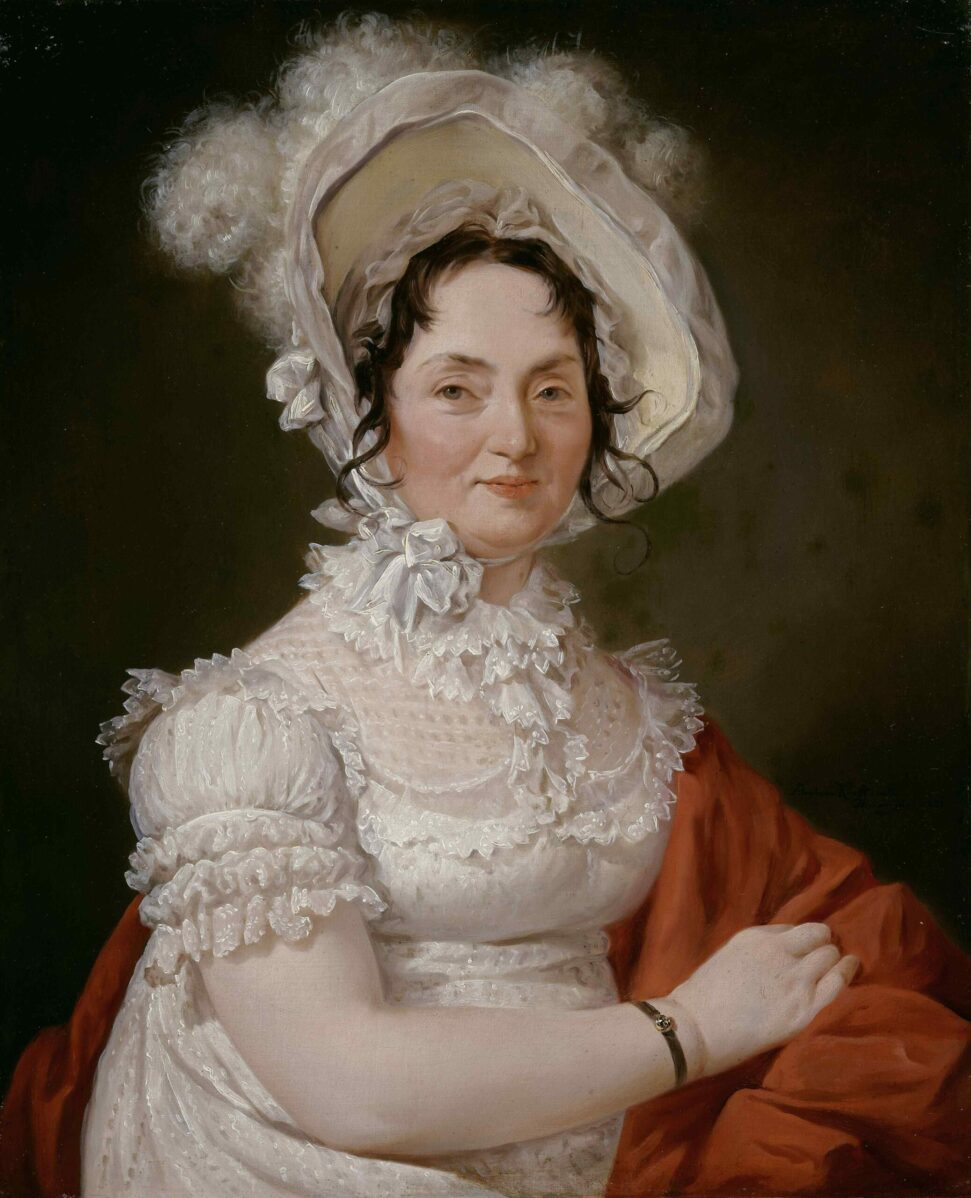
Barbara Krafft is known to everyone as the creator of the most famous posthumous portrait of Mozart, but probably hardly anyone knows her by name. Born in Jihlava (Iglau) in what is now the Czech Republic, the artist received her first lessons from her father, Johann Nepomuk Steiner, an imperial and royal court painter and member of the Academy. In a nod to his fame, the painter—who was married to the Viennese pharmacist Joseph Krafft—always signed her work with the addition “nata Steiner.” She lived in Vienna, Salzburg, Prague, Salzburg, and Bamberg. While she initially followed her husband, her second stay in Salzburg and the subsequent one in Bamberg were likely due to the favorable market for commissions. Barbara Krafft, who raised her two children, Johann Nepomuk (August) and Barbara, on her own, had to make a living from her portraiture. The task of a portraitist consists not only in rendering the physiognomy as accurately as possible, but also in capturing the subject’s essence: the biographies of those portrayed (media stations) bring the exhibition to life just as much as the displayed accessories (clothing, jewelry, everyday objects).
The exhibition will focus primarily on Krafft’s most famous portrait. It will explore both the well-documented history of its creation and the challenge of creating a posthumous portrait. Given the painting’s exceptional fame, the exhibition will trace its reception history, including its reintroduction on the Mozartkugel starting in 2006.
The painter, and above all her “bold, masculine style,” received a great deal of recognition during her lifetime. Newspaper advertisements for sales exhibitions help illustrate the economic survival strategies of a female artist at the turn of the 18th to the 19th century, who was still barred from admission to the Academy.
The exhibition is conceived as a monographic exhibition and is accordingly organized around the key stages of the painter’s life.