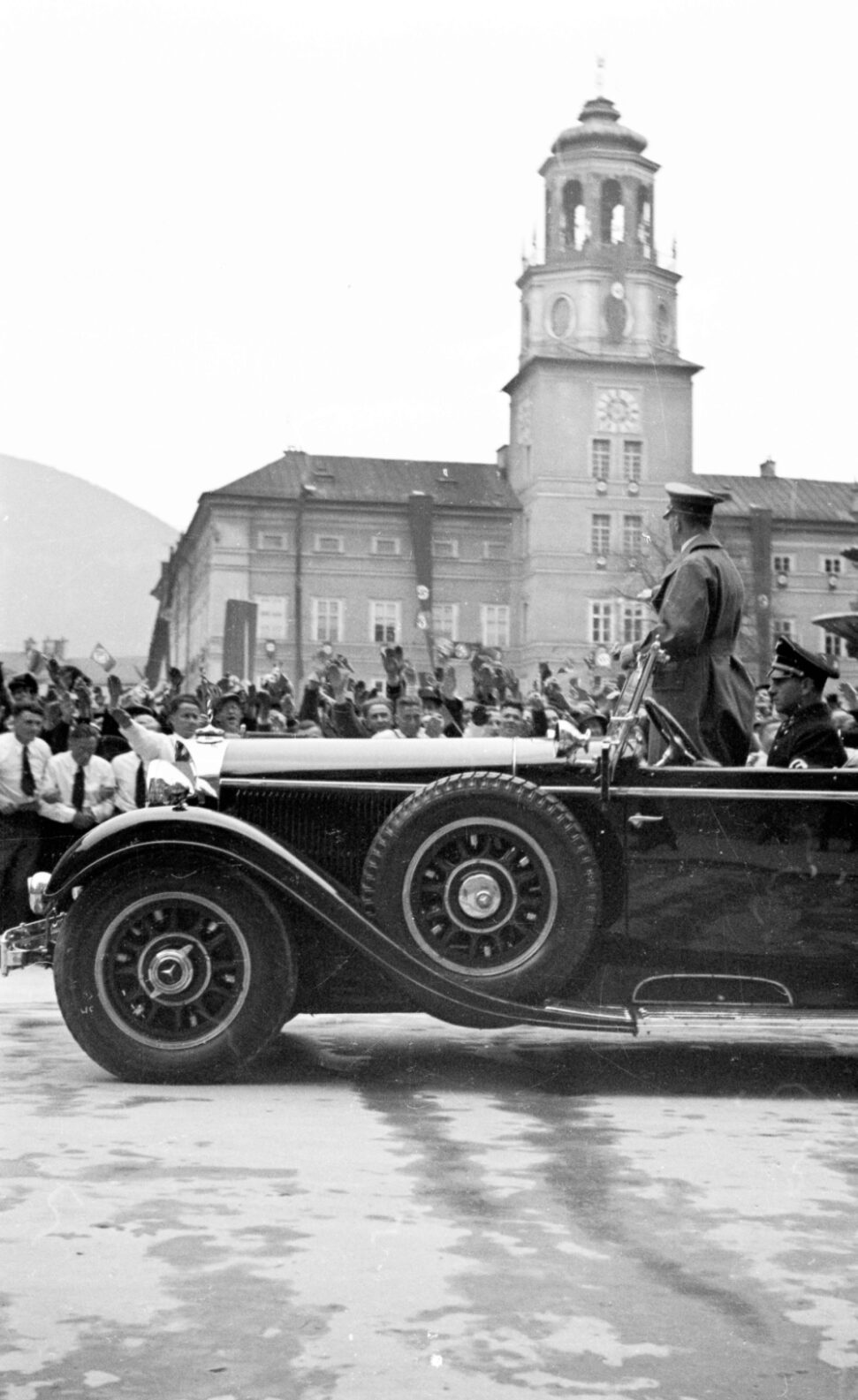
Eighty years ago, Austria was annexed by Nazi Germany in the event known as the “Anschluss.” To mark this anniversary, the Salzburg Museum is dedicating an exhibition to the history of Salzburg between 1938 and 1945. The exhibition focuses in particular on the Salzburg Museum—then known as the Museum Carolino Augusteum—and the people who shaped it during the Nazi period in Salzburg.
The Guiding Idea of the Project
In addition to examining the history, fate, and role of the museum during the war years, the project analyzes the professional biographies and networks of museum employees during this period. The exhibition places these individuals within the broader context of Salzburg’s history and culture, as well as the development of the Second World War.
Held in the Kunsthalle of the Salzburg Museum, the exhibition explores events related to the museum during the Nazi era. Topics include gifts from the museum’s collection presented to Hermann Göring and Adolf Hitler in 1938, exhibition projects and programmatic priorities during the war, the evacuation of the collection, and ultimately the destruction and dissolution of the museum in the autumn of 1944.
The exhibition also examines the role of the individuals involved. How did they work within the framework of Nazi propaganda? What influence did the political climate have on the museum’s publications, research activities, collecting practices, and exhibitions? The personal contacts and professional networks of museum staff, as well as the disruptions and continuities in their careers before, during, and after the Second World War, are also addressed.
The exhibition presents the results of scholarly research through an installation that brings together artworks (objects from the collection), publications, personal and institutional materials, documents, films, photographs, chronologies, and biographies.
In examining its own institutional history, the Salzburg Museum combines findings from biographical research with the results of projects that, since the 1990s, have shed light on culture in Salzburg during the Nazi era through both broad and specialized studies.
By revealing these connections, the project offers representative insights into the functioning of a public cultural institution during the Second World War in Austria and into the relationship between culture and dictatorship in Salzburg. The result is an exhibition that, eighty years after the Anschluss, can make pointed observations about the interactions between institutional and personal actions, political and ideological directives, and the cultural conditions that existed during the Nazi period.
Concept, Structure, and Themes of the Exhibition
The exhibition “Anschluss, War & Rubble” is organized chronologically. It guides visitors through themes associated with the years of National Socialism in Austria and the Second World War between 1938 and 1945.
The sequence of content is structured through the exhibition’s design and architecture and unfolds along a timeline. Each section of the exhibition presents a specific museum year in the context of Salzburg’s culture and history, while also relating it to major world events between 1938 and 1945.
A documentary layer serves as the overarching framework of the exhibition. Photographs and film excerpts from the Nazi period reveal carefully staged realities. The close entanglement of culture and propaganda is a central focus. Particular attention is also given to Salzburg-specific themes, including Mozart, the Salzburg Festival, the historic city, and Salzburg’s alpine landscape.
Conclusion and Final Assessment
The exhibition concludes with an assessment of the museum’s institutional history, portraying the Salzburg Museum in many respects as a “political” museum that served the goals and ideologies of National Socialism.
Between 1938 and 1945, the museum fulfilled all of the museological functions defined at the time—collecting, exhibiting, and conducting research—in accordance with the cultural policies imposed on such institutions. Moreover, its collecting activities benefited significantly from Nazi confiscations.
Although the museum suffered severe damage from bombing during the final days of the war and was literally left in ruins, the emphasis placed on reconstruction after 1945 overshadowed any critical examination of the institution’s role during the Nazi era. This also reflects the continuity of the individuals who remained active within the museum. They continued to shape its historical narrative until the late 1970s, and only in recent years has that narrative been subjected to critical revision and reassessment.
It was in this spirit that the exhibition “Anschluss, War & Rubble” was conceived in the commemorative year 2018, marking eighty years since Austria’s annexation by Nazi Germany.