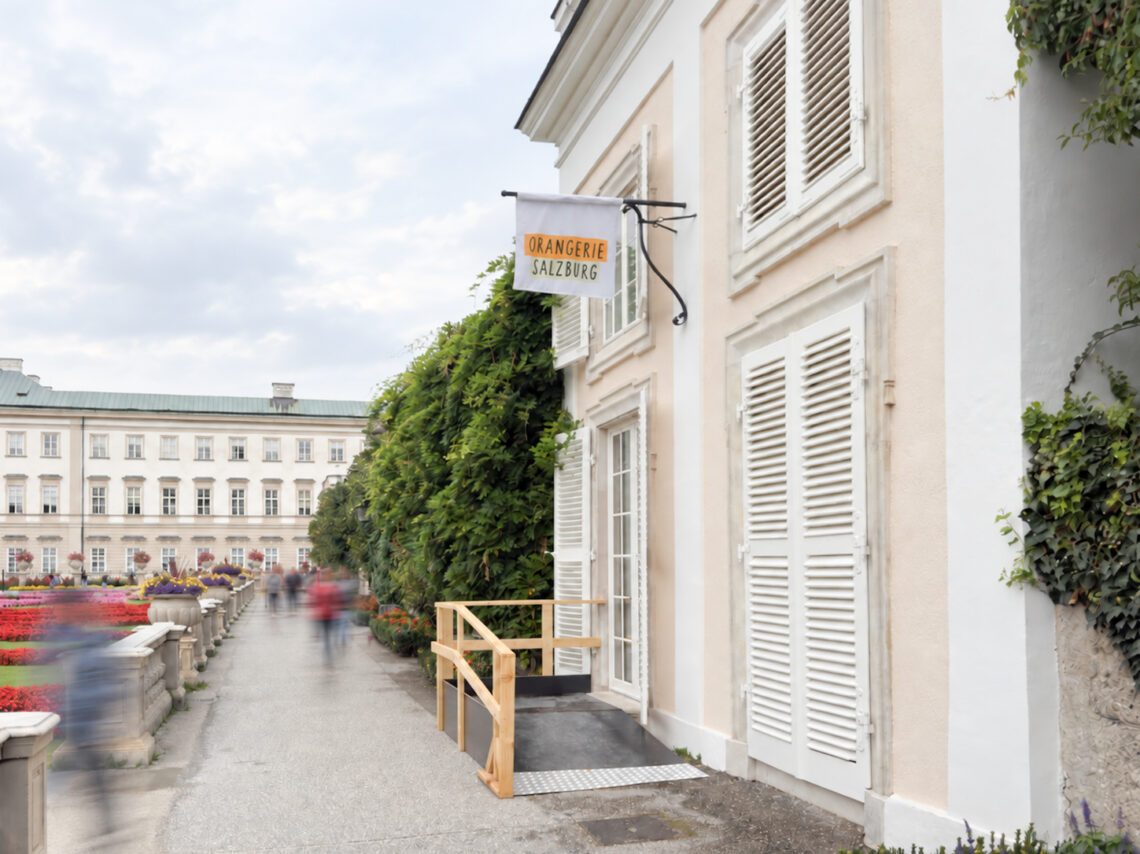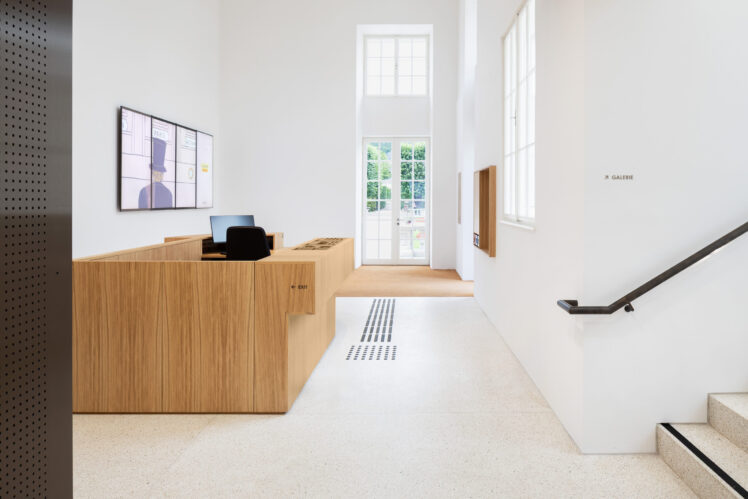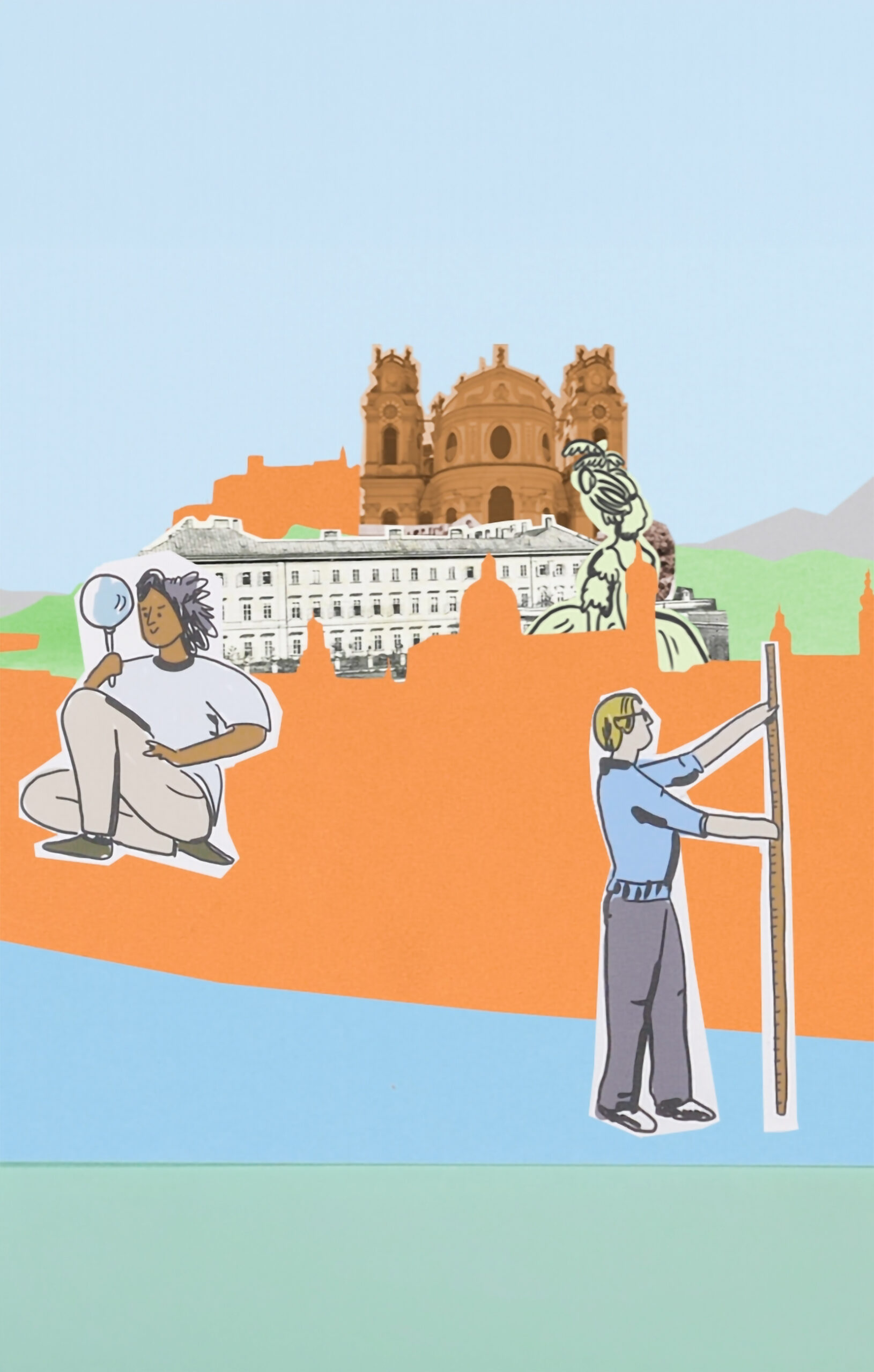
Due to the redesign of the Orangerie Garden, the access to the museum will be via the side entrance in the Mirabell Garden until approximately the end of November (see photo).
Thank you for your understanding!
About the museum
Orangery Salzburg – Panorama | UNESCO World Heritage
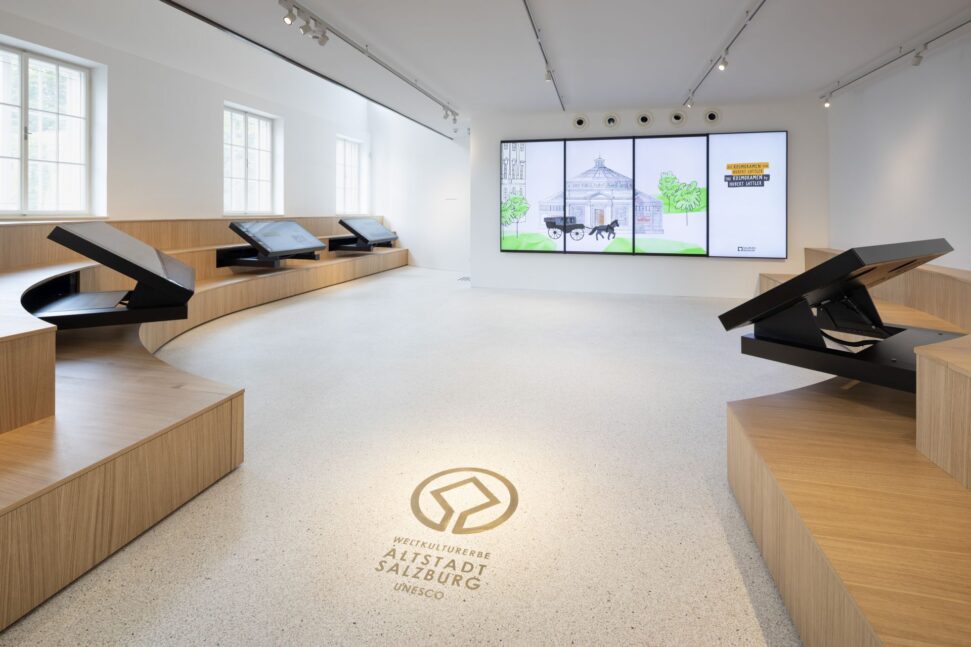
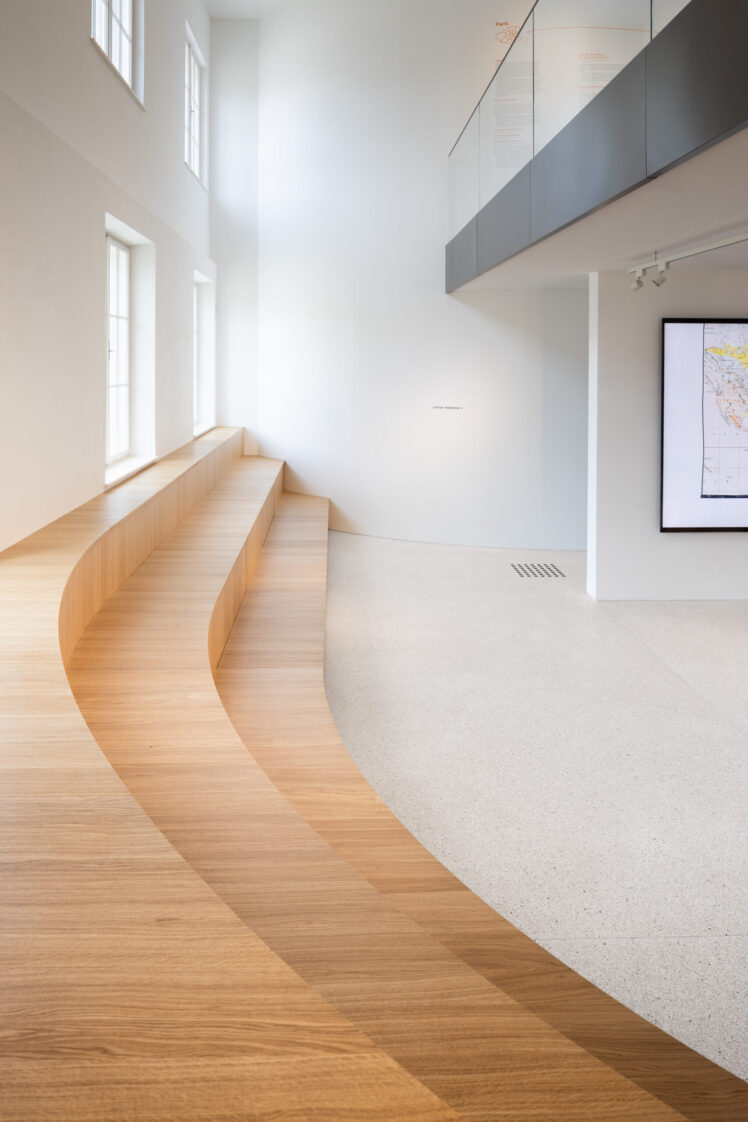
The Orangery Salzburg invites visitors to experience the UNESCO World Heritage Site in the Mirabell Gardens, one of Salzburg’s most beautiful locations. Starting with the famous Salzburg Panorama by Johann Michael Sattler, short films, media installations by Ars Electronica Futurelab, and temporary exhibitions provide insights into the history and present-day significance of Salzburg as a UNESCO World Heritage Site. The Orangery Salzburg is the ideal starting point for discovering the historic old town and experiencing it as a unique cultural landmark and heritage of humanity.
Impressions of the Orangery Salzburg
Plan your visit
Everything you need to know before visiting the museum
Public Guided Tours Please note that our regularly scheduled public guided tours are currently offered in German only.
Private Guided Tours Would you like to explore the museum with your own group? Book a private guided tour of the Orangery Salzburg. Starting with Johann Michael Sattler’s famous Salzburg Panorama, the tour offers fascinating insights into the history and present-day life of the city. Films, media installations and exhibits bring Salzburg’s unique heritage to life and spark curiosity about its historic Old Town.
Duration: 40 minutes Age: 6 years and above Price: 65 Euros flat fee per guided tour (max. 20 people), plus museum admission
Inclusion is an important part of our work at Salzburg Museum. We strive to make museum visits as independent, enjoyable, and enriching as possible for everyone.
Mobility
The entire museum is fully accessible.
Accessible restrooms are located on the lower ground floor.
A platform lift is available for Johann Michael Sattler’s Salzburg Panorama, providing barrier-free access. Please note:The platform of the lift measures 90 cm in depth and 80 cm in width and will be enlarged in the near future.. If you have any questions about accessibility or would like to check in advance whether the lift is suitable for your individual needs, please feel free to contact us at inklusion@salzburgmuseum.at.
Visual
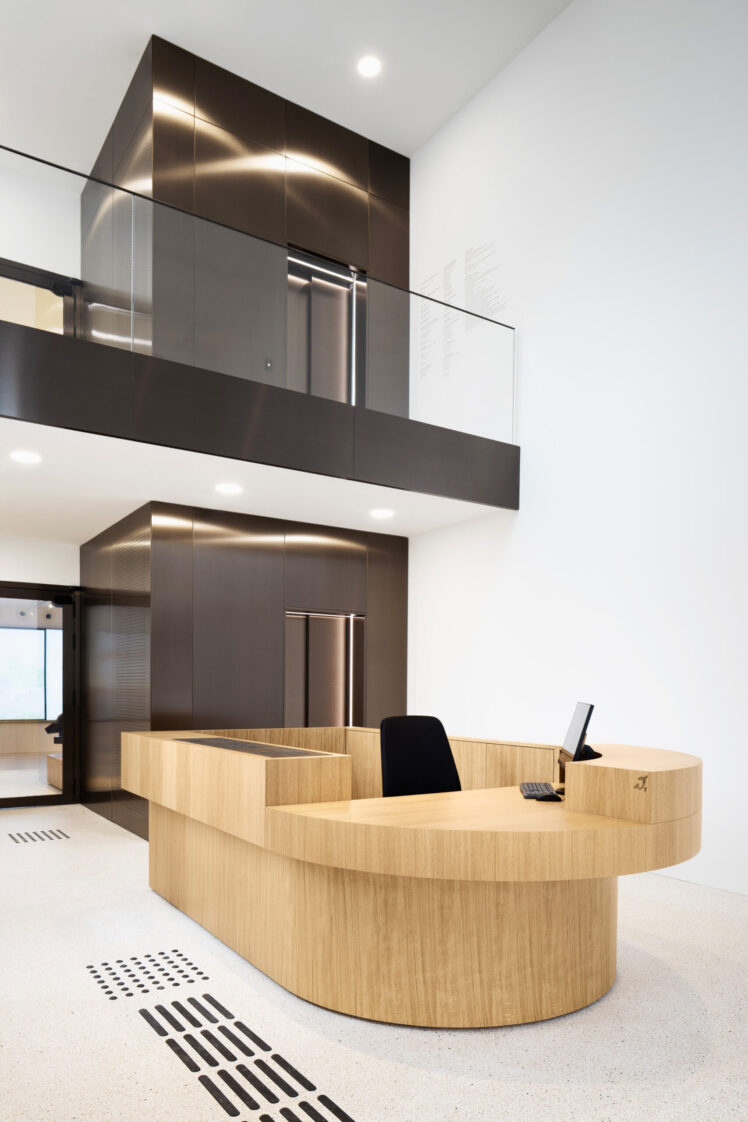
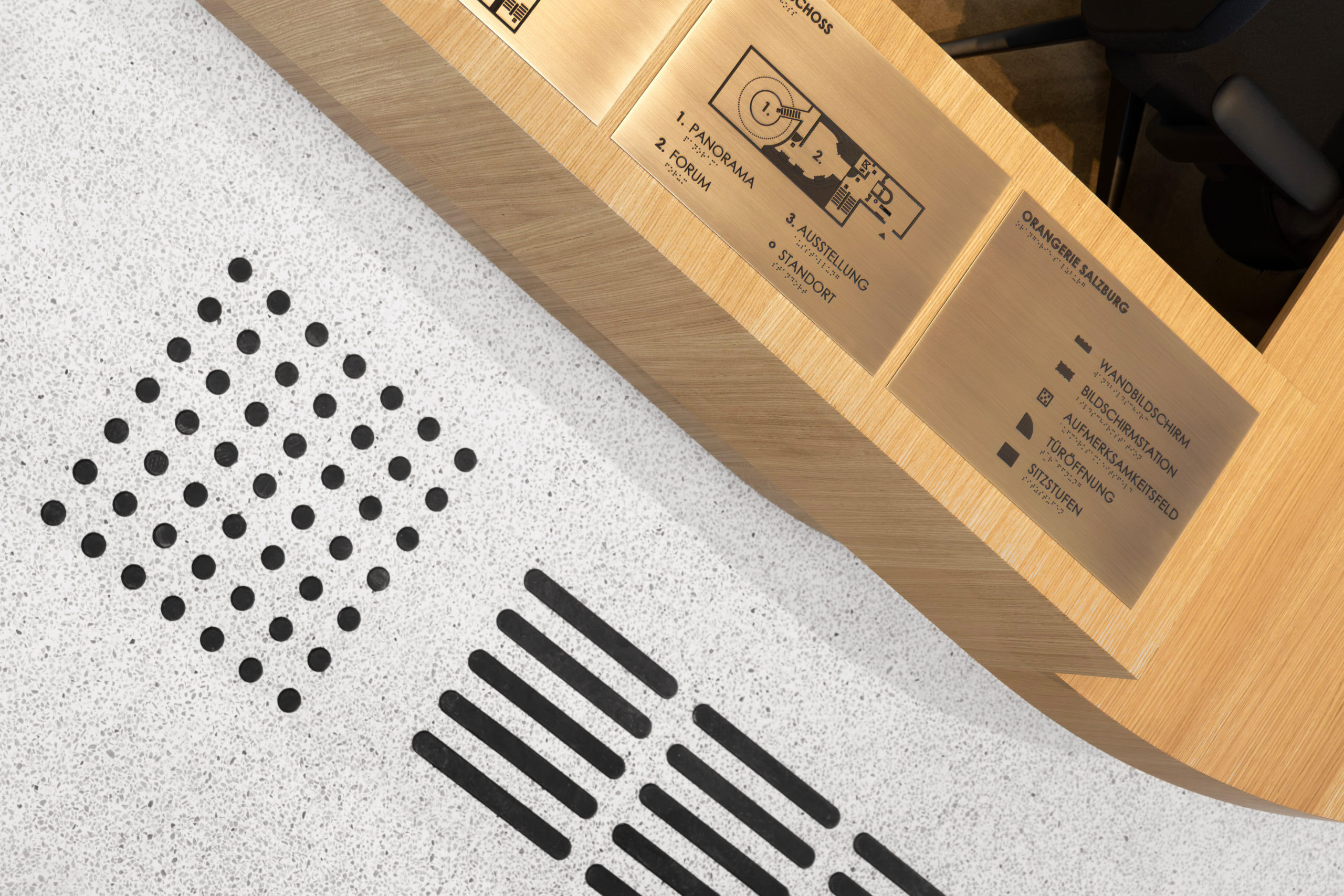
A tactile guidance system leads from the entrance to the information desk.
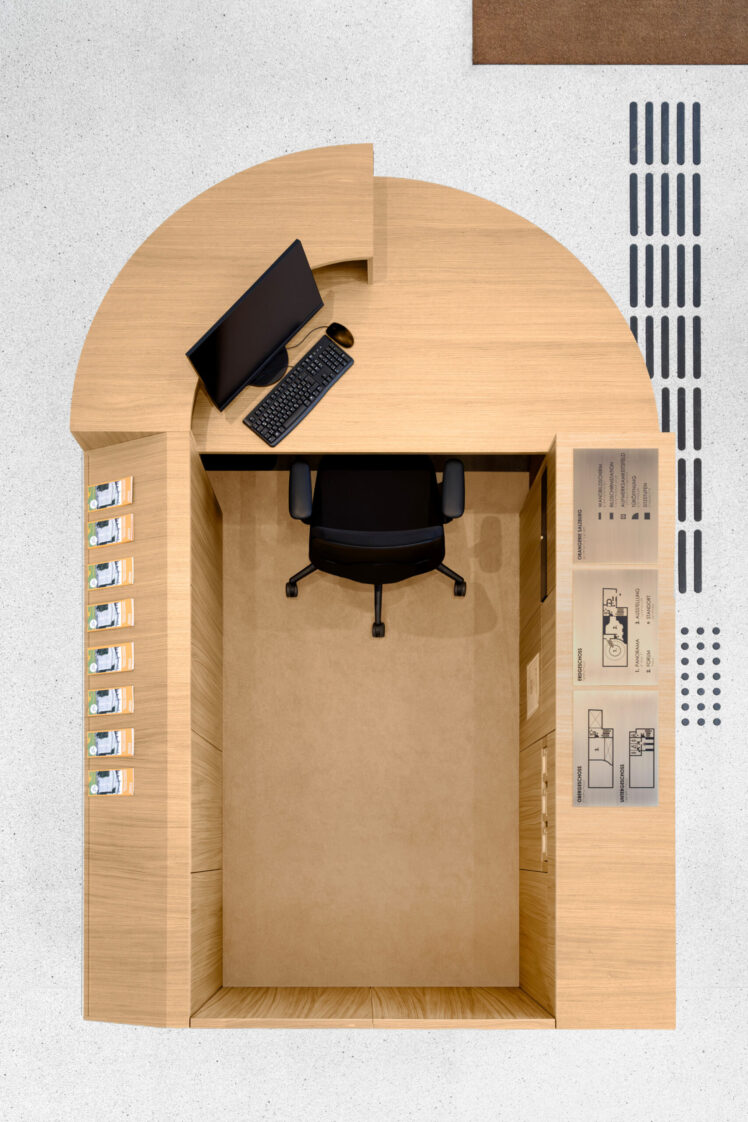
Tactile orientation maps for each floor are available at the ticket and information desk.
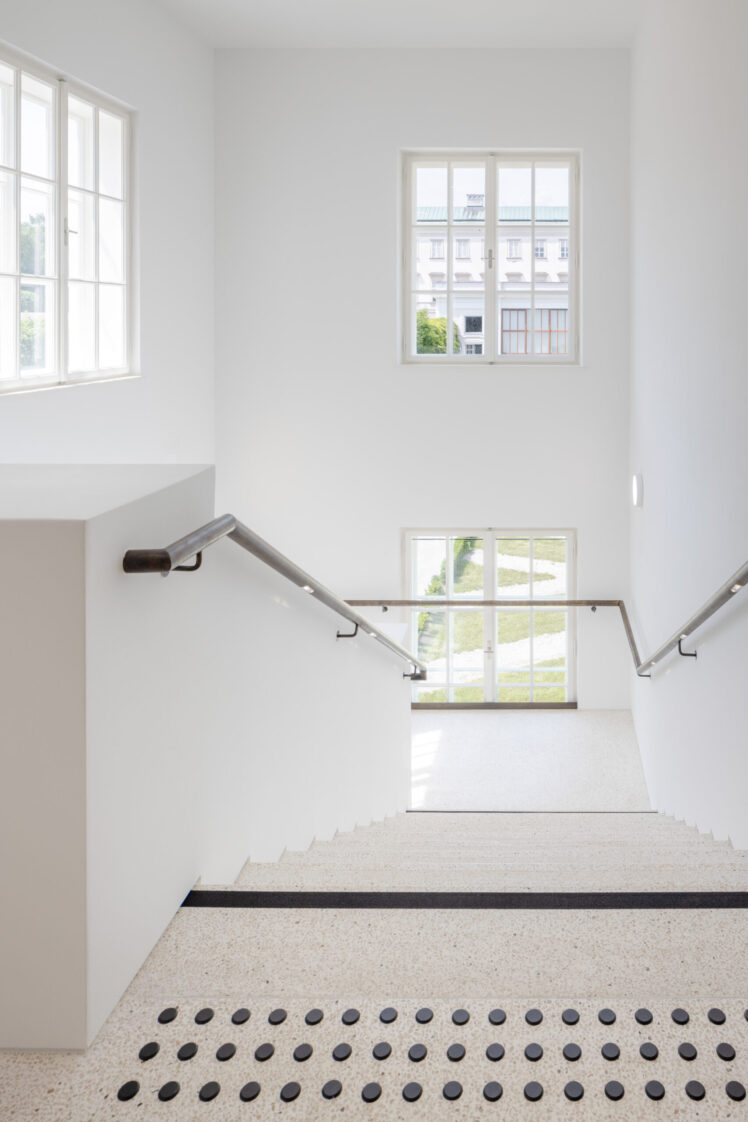
Stairs and important orientation points are marked with tactile and high-contrast floor indicators.
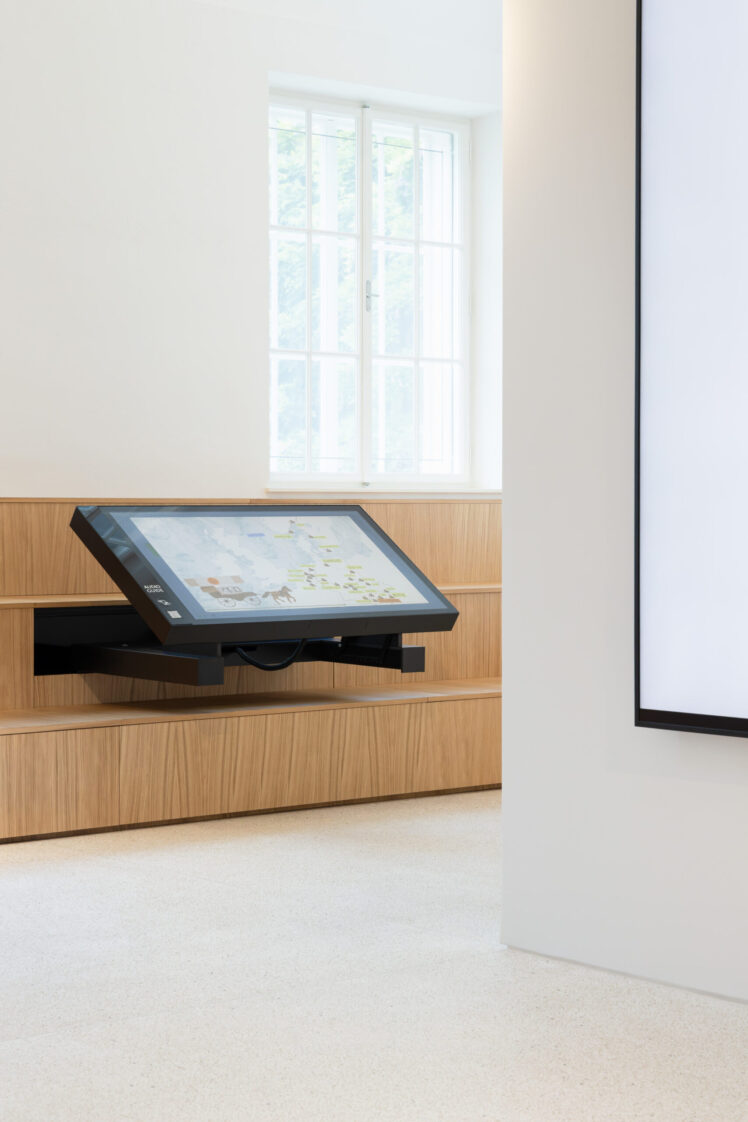
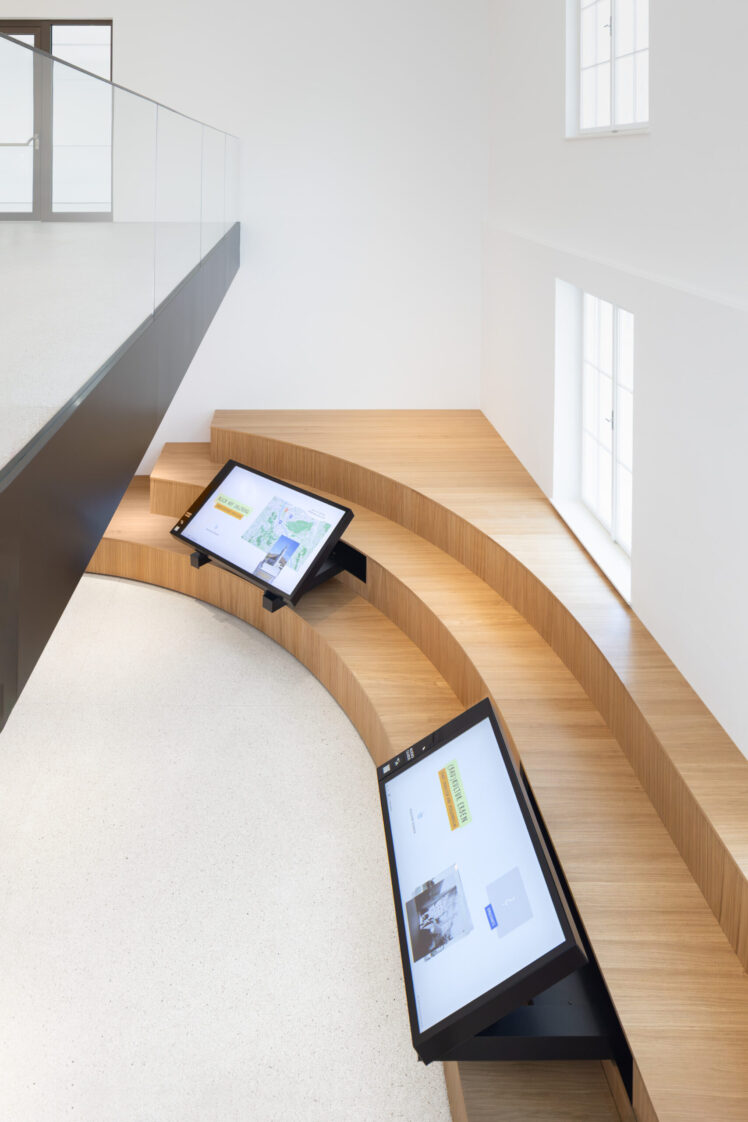
All media stations feature a QR code and an NFC tag in the lower-left corner. These allow visitors to open a smartphone guide on their own mobile device, designed for blind and visually impaired users.
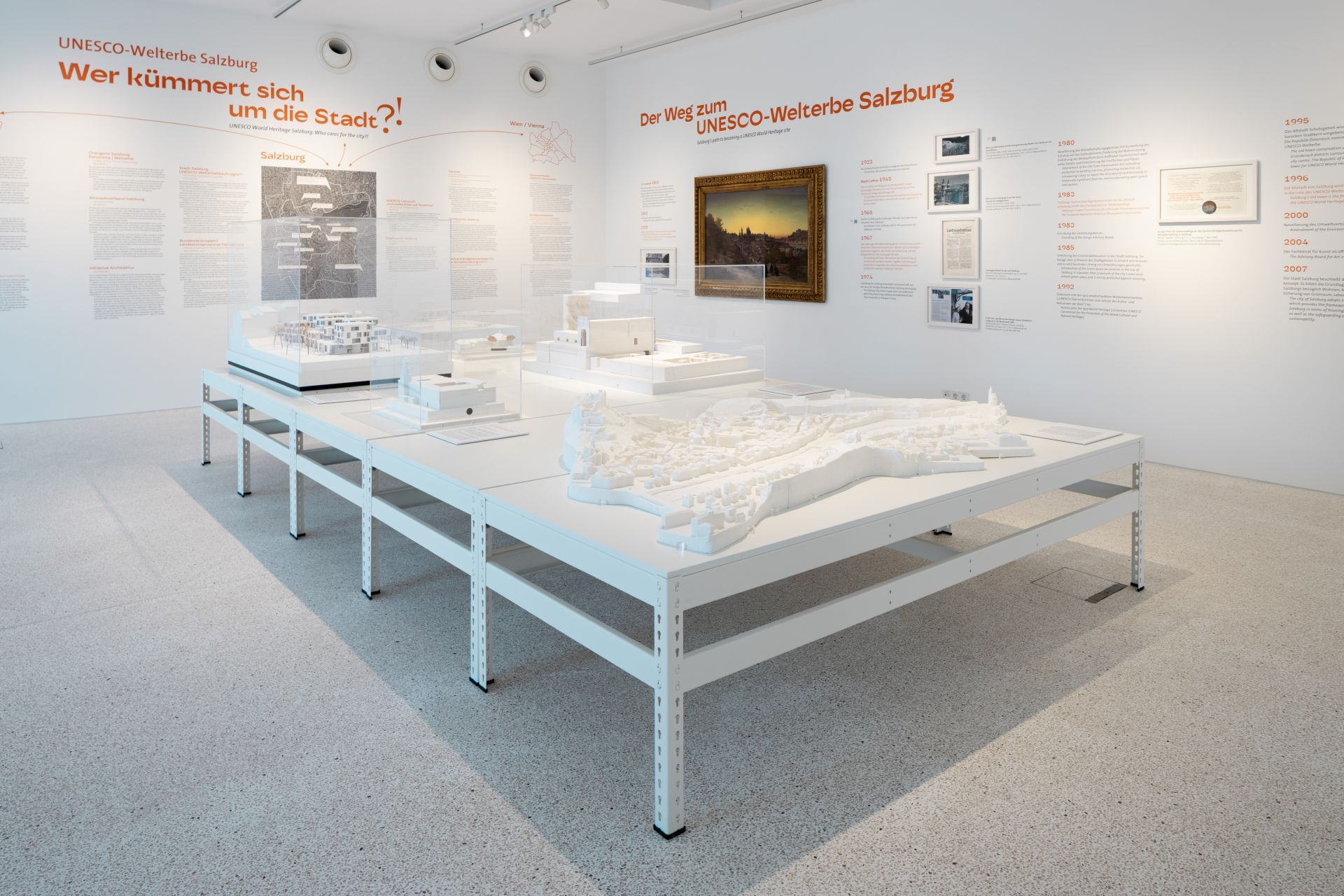
On the first floor, a tactile city model makes the UNESCO World Heritage areas of Salzburg tangible and easier to explore.
An audio guide is available for the large Salzburg panoramic painting.
Auditory
Videos in Austrian Sign Language (ÖGS) are available for selected content.
We also provide clearly written texts in “Plain Language”.
Cognitive
The texts at all media stations are also available in Easy Language. This option can be activated directly at each station using the “Plain Language” function.
We also offer guided programs in Plain Language, in sign language, and for blind and visually impaired visitors.
If you would like to arrange a guided program at an individual date and time, please contact us at inklusion@salzburgmuseum.at.
Feedback
Accessibility is an ongoing process. We welcome your questions, feedback, suggestions, and ideas so that we can continuously improve our services. We are also happy to assist you in planning your visit. Please contact us at inklusion@salzburgmuseum.at.
The Sattler-Panorama
Glorious views!
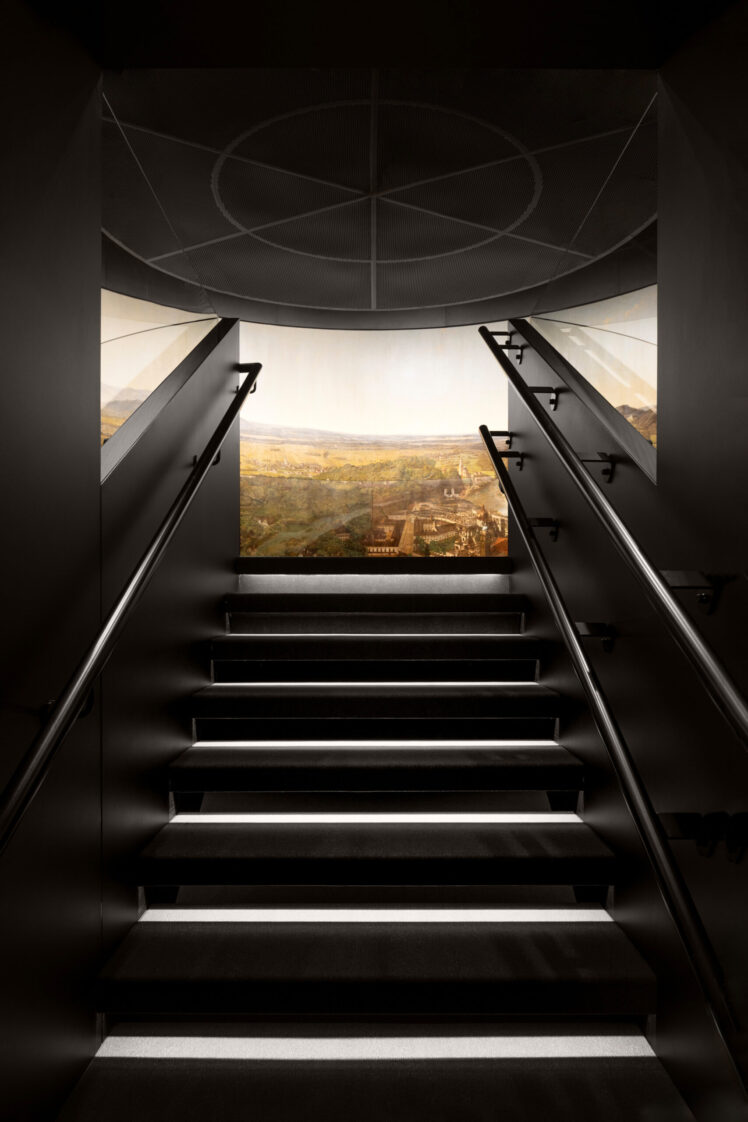
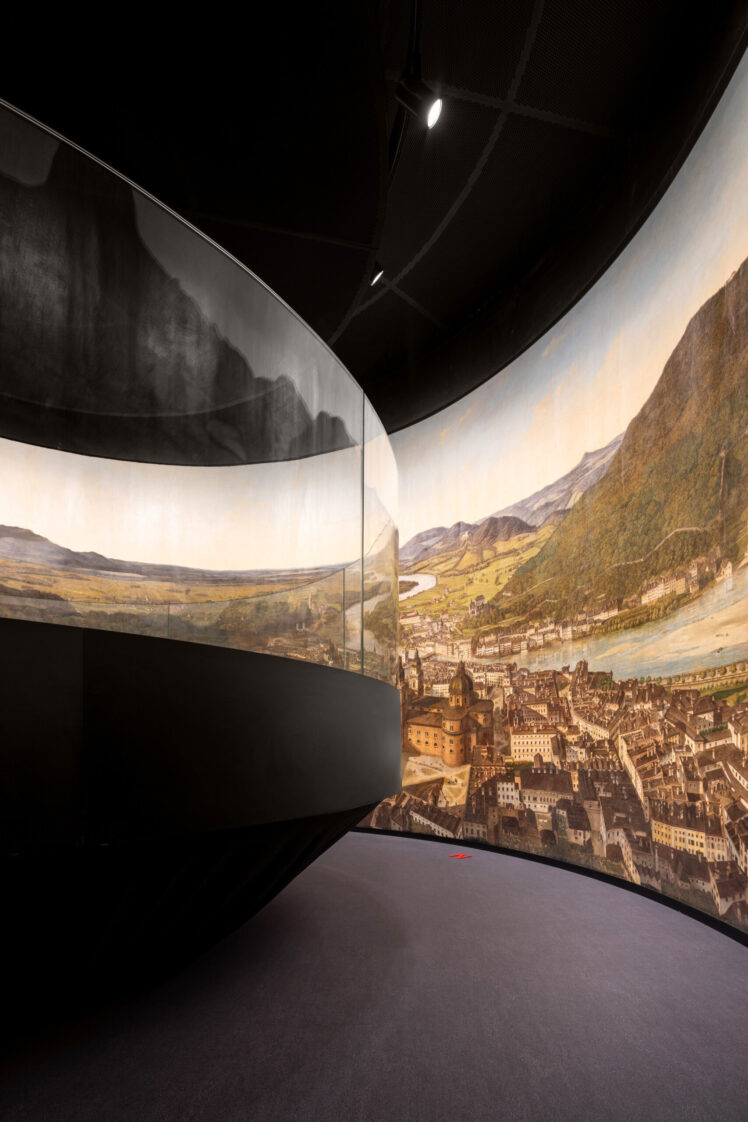
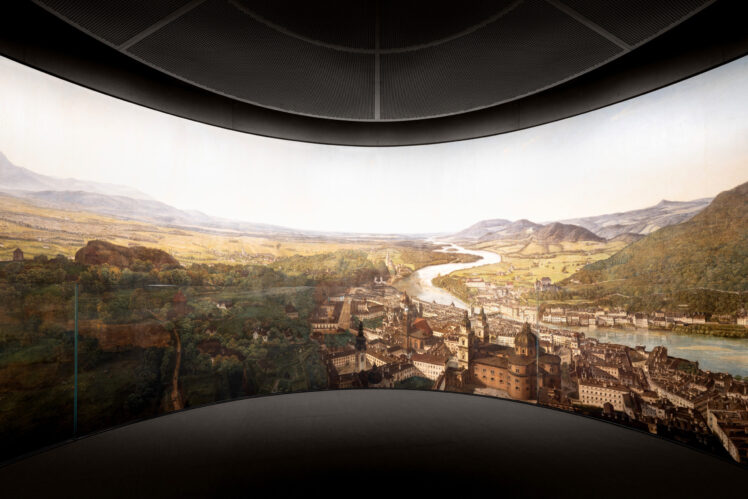
The main attraction of the Orangery Salzburg is the famous Salzburg Panorama by Johann Michael Sattler. This historic circular painting was created in the 1820s and offers a fascinating depiction of what Salzburg and its surroundings looked like at that time. At a single glance, the panorama conveys both the essence and the reasons behind Salzburg’s designation as a UNESCO World Heritage Site — among them its status as a unique, authentic, and exceptionally well-preserved example of a European ecclesiastical city-state, as well as its outstanding collection of high-quality architecture spanning from the Late Middle Ages to the 20th century. With the new presentation of the circular painting in the Orangery Salzburg, the panorama can now be experienced barrier-free for the first time.
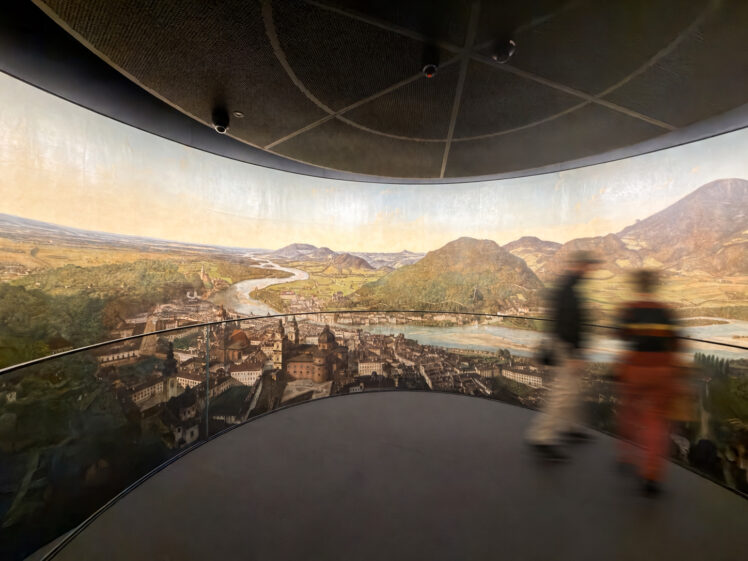
A panorama as far as the eye can see: Johann Michael Sattler depicts the city of Salzburg and its surroundings in the panoramic painting created between 1825 and 1829. He chose a sunny autumn afternoon at 4 o’clock, as all the tower clocks and sundials show. The view still seems familiar to us today, but on closer inspection, quite a lot has changed.
The picture is striking for its topographical precision, above all in the built-up areas of the city. All the window axes, chimneys, and roof forms of the buildings exactly match reality. On closer inspection, one can also discover a multitude of people from all walks of life and professions, engaged in all kinds of activities. Only the landscape above the doorway is fictional; Sattler invented it because otherwise part of the city (in the Nonntal area) would have been missing in the area of the door (which was later enlarged slightly).